Introduction
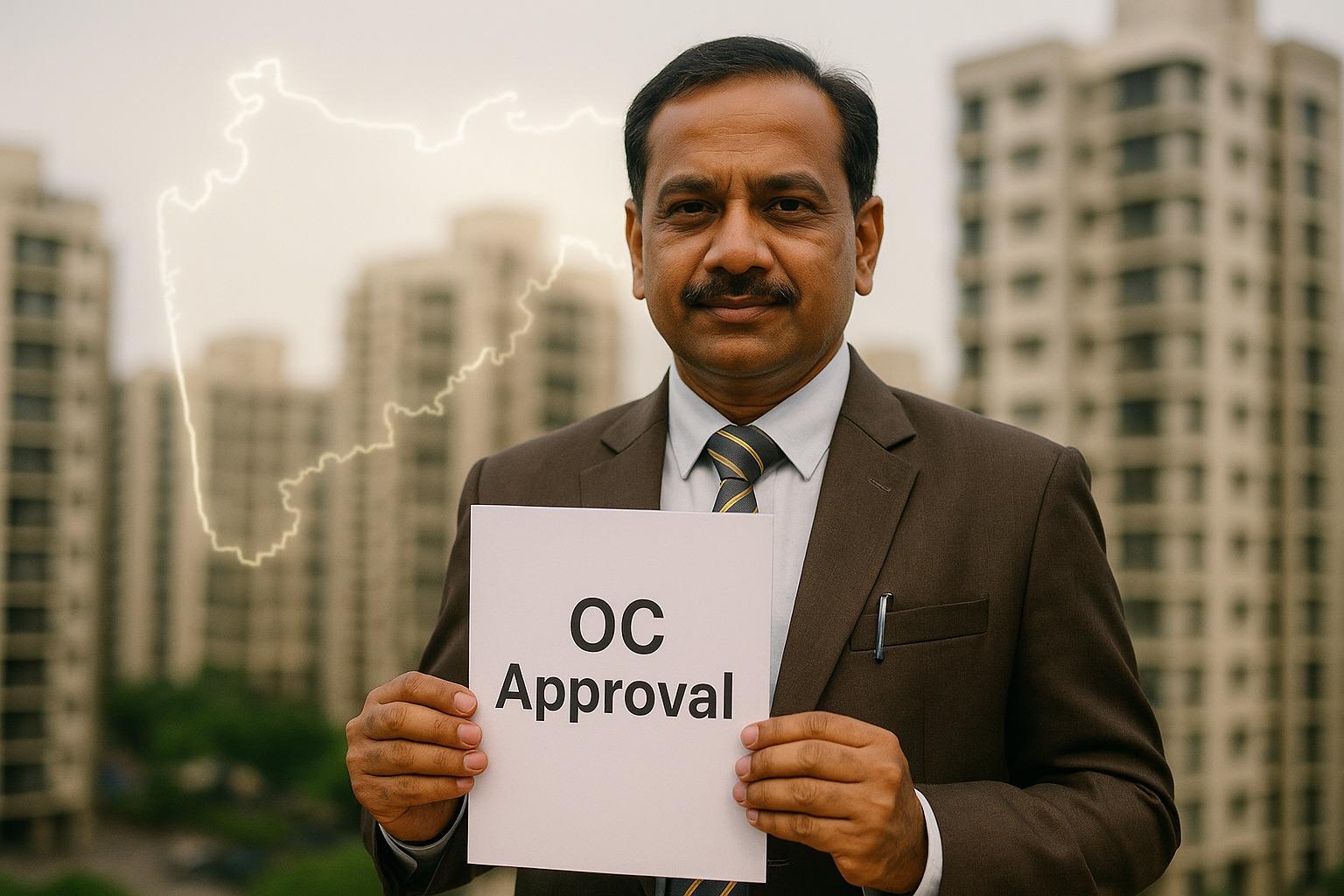
For decades, thousands of housing societies in Mumbai have been living in uncertainty without an Occupancy Certificate (OC), a crucial legal document required for a property to be considered fully approved and fit for living. Without an OC, residents face multiple challenges such as lack of basic utilities, restrictions on resale, and higher financial risks. Recognizing this long-pending issue, the Maharashtra government has recently announced a plan to grant OCs to nearly 25,000 housing societies across Mumbai.
This move is expected to provide immense relief to homeowners, improve transparency in the Mumbai property market, and strengthen overall real estate growth in Maharashtra.
What is an Occupancy Certificate (OC)?
An Occupancy Certificate is an official document issued by the local municipal authority or relevant government department, certifying that a building has been constructed according to approved plans, safety norms, and building codes.
Confirms that the property is safe and fit for occupation.
Ensures the builder followed environmental and fire safety regulations.
Is mandatory for property registration and obtaining utilities like water, electricity, and gas.
Essential for homeowners to sell or mortgage their flats legally.
In the absence of an OC, residents face difficulties in getting home loans, legal ownership clarity, and even resale value.
Why Do So Many Housing Societies in Mumbai Lack OC?
Despite being one of India’s most advanced real estate markets, Mumbai has nearly 25,000 housing societies without occupancy certificates. Some of the major reasons include:
1. Deviations from approved building plans by developers.
2. Pending approvals and clearances from civic authorities.
3. Non-payment of penalties or regularization fees by builders.
4. Lack of awareness among buyers about the importance of OC at the time of purchase.
5. Long-standing disputes between developers, residents, and municipal bodies.
This has left lakhs of homeowners in limbo, unable to fully enjoy ownership rights.
Maharashtra Government’s OC Grant Plan
The Maharashtra government’s housing plan aims to resolve this issue once and for all by easing the process of granting OCs to housing societies that have been waiting for years.
Key Highlights of the Plan:
Around 25,000 housing societies in Mumbai will be eligible.
The scheme will involve streamlined approval processes and reduced red tape.
Certain violations may be regularized by charging compounding or penalty fees.
Priority will be given to societies that have met the majority of safety norms.
Special committees may be formed to speed up OC clearances.
This proactive step is expected to restore confidence in Mumbai’s real estate sector and provide legal recognition to lakhs of homeowners.
Benefits of OC for Housing Societies in Mumbai
Getting an Occupancy Certificate is not just a legal formality but has direct benefits for residents.
1. Legal Security for Homeowners
Flats without OC are often considered “illegal possessions.” Once societies get OCs, residents will have full legal protection of their property.
In several cases, water supply, drainage, and electricity connections are restricted without OC. The new approvals will give residents uninterrupted access to basic utilities.
3. Improved Resale and Rental Value
A flat with a valid OC commands a higher resale value. With this scheme, the Mumbai property market will see an increase in transaction activity.
Banks and financial institutions prefer lending only for projects with OC. Post-implementation, home loans and mortgage options will become easily available.
5. Peace of Mind for Residents
Most importantly, OC brings mental relief to residents who have been living under uncertainty for years.
Impact on Mumbai Real Estate Market
This decision by the Maharashtra government will have far-reaching implications:
Boost in Buyer Confidence: Many buyers hesitate to invest in under-construction or non-OC projects. With more societies getting OCs, trust in the system will rise.
Stronger Demand in Mumbai Real Estate: Legal clarity will attract both end-users and investors.
Reduction in Property Disputes: Once OCs are granted, legal battles between residents, developers, and civic authorities will reduce significantly.
Improved Housing Quality Standards: Developers will now be under pressure to follow building norms strictly.
Challenges in Implementation
While the plan looks promising, there are challenges:
Identifying societies with major structural violations may delay approvals.
High regularization fees might be a burden for middle-class housing societies.
Coordination between multiple government bodies and municipal departments is needed.
Preventing builders from misusing leniency in future projects will be crucial.
Despite these hurdles, the initiative is widely being seen as a positive reform in Maharashtra’s housing policy.
Conclusion
The Maharashtra government’s plan to grant Occupancy Certificates (OC) to nearly 25,000 housing societies in Mumbai is a landmark step in solving one of the city’s most pressing real estate problems. By ensuring legal ownership, providing access to utilities, and increasing the market value of properties, this initiative will bring relief to lakhs of residents.
For the Mumbai real estate market, it means greater transparency, higher buyer confidence, and more robust growth in the years ahead. While implementation challenges remain, the move is undoubtedly a game changer for Maharashtra housing.
100-Word Summary
The Maharashtra government has announced a plan to grant Occupancy Certificates (OC) to nearly 25,000 housing societies in Mumbai, solving a decades-old issue affecting lakhs of residents. An OC is a crucial legal document that certifies a building’s safety and compliance with approved plans. Without it, homeowners face challenges in resale, loans, and utility access. The new initiative aims to streamline approvals, regularize minor violations, and boost buyer confidence in the Mumbai property market. This step will provide legal security, better utilities, higher property value, and peace of mind for thousands of Mumbai homeowners.